Why Does a Local Mac App Need My Usage Data?
I want to trust the apps on my Mac. As a developer, I am asking what usage analytics actually improves, why it starts automatically, and who benefits.
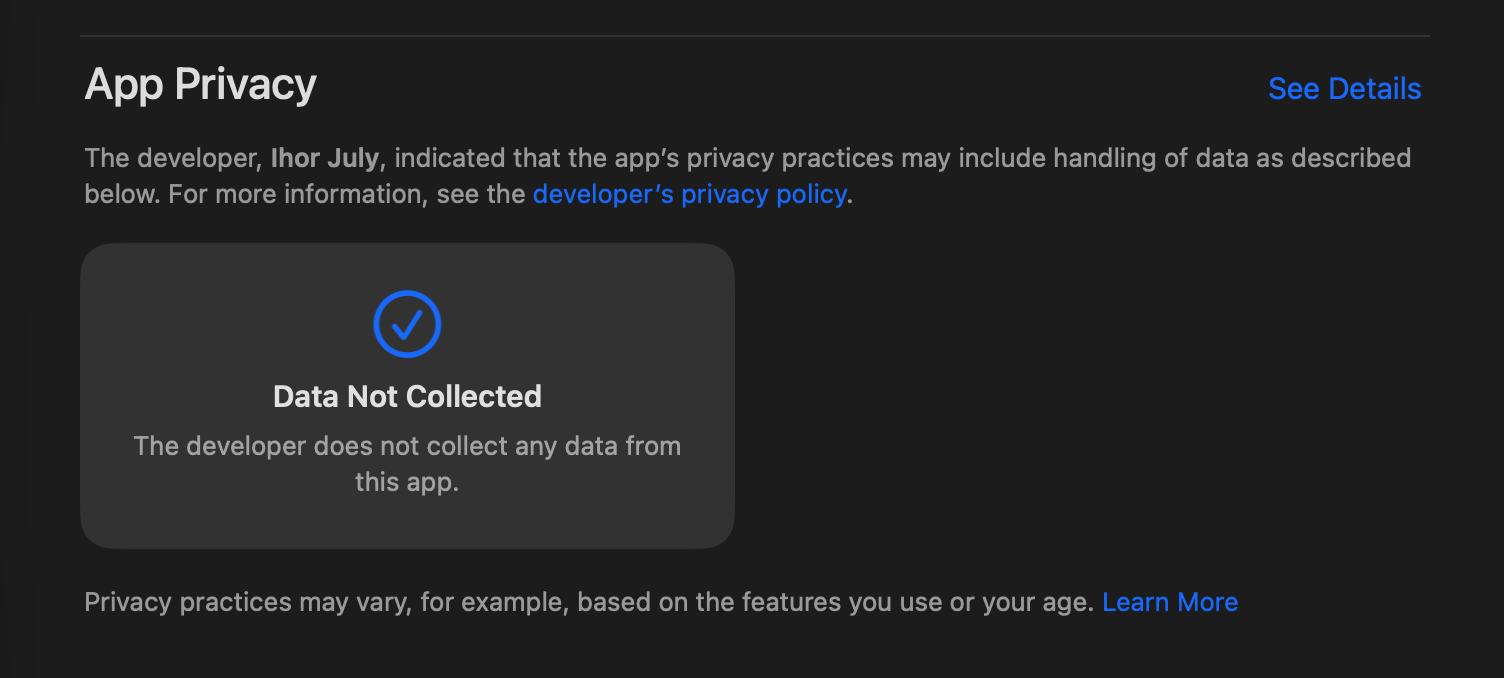
I want to open a text editor, edit a file, and get on with my day. I want a small Mac utility to solve the problem I installed it for. Having to investigate whether it also reports my habits to a server is an exhausting extra job.
I am a Mac developer, and I believe this should be a worldwide standard. An app that performs an offline task must stay offline.
I understand wanting to know whether people buy an app and where it lets them down. I also understand receiving a crash report after something breaks, with the user's permission.
If you add usage analytics to a local app, what exactly does it help you improve?
Tell me what actually changed
Sales and download statistics help a developer understand demand. They do not tell you which button people press or where they abandon a workflow. I understand that distinction.
I can imagine useful questions for analytics. Perhaps people cannot find an export option or give up halfway through setup. Perhaps a feature you assumed was unimportant turns out to be essential.
But what happened in your app? What did you measure, what did you change, and did it help?
"We use analytics to improve the product" leaves all of that unanswered. A specific example would help me understand the tradeoff.
I can see the business incentive in an app funded by advertising. My question is especially about the other kind of software, the local editor or utility I install to do a focused job. Why should ordinary use of that app automatically become a stream of events for someone else to analyze?
The moment the privacy promise becomes a question
I use Little Snitch to monitor app connections. When an app offers a setting to disable usage analytics, I check what happens after changing it.
I have seen an app state "no data collected" while still connecting to Google Analytics and the developer's own analytics subdomain.
The destinations alone do not establish what was transmitted, what was retained, or whether the privacy statement was wrong. That requires more evidence about the requests and how the servers handle them.
But as a user, seeing those connections leaves me with a reasonable question. How does that behavior fit the promise I just read?
Apple's terminology also matters here. Its App Store privacy guidance defines collection around data leaving the device and remaining accessible beyond the time needed to handle the request. A "Data Not Collected" label is therefore not a promise that an app never connects to the internet. Developers must account for their own collection and that of integrated partners, subject to Apple's disclosure exceptions.
If analytics is disabled, explain what that setting actually stops and why any remaining connections are needed.
I do not want to become a network investigator every time I install a useful app. I want the explanation, the settings, and the behavior to agree.
Useful data does not justify background reporting
Even if analytics helps improve an app, that does not make background reporting part of the offline task I asked it to perform. Choosing to send feedback or a crash report is a separate action.
If too few users would volunteer, how do you weigh that against their choice? A bigger dataset may help you make decisions. I still want a say in whether my activity belongs in it.
Direct feedback has limits too. Some people never write to support. Some abandon an app without explaining why. A developer can miss problems by hearing only from the people willing to complain.
How little can you collect and still answer those questions? Can users decline without losing the app's ordinary functionality?
"Anonymous" also leaves practical questions open. What events leave the Mac? Is there a persistent identifier? How long are the records kept? Can an outside analytics provider use them for anything beyond helping you operate the app?
I care about who receives the data and who benefits from it, even when my name is absent.
Developers, show me the tradeoff
I want to understand how developers make this decision. Understanding the reasoning does not change my view that offline tasks must stay offline. If you collect usage analytics, I would like to hear about these points.
- One actual product decision that came from the data, and why crash reports or direct feedback did not provide enough information.
- What you collect, when collection starts, and what happens when a user turns it off.
- Who receives the data, how long it is retained, and whether it is sold or used for purposes beyond improving your app.
If you build without usage analytics, I would like to hear from you too. How do you find the problems users never report, and what do you accept that you cannot measure?
I like supporting people who make thoughtful Mac software. That makes this frustrating. I want to feel comfortable recommending an app without adding a warning about its analytics settings.
If you removed usage analytics from your app tomorrow, what would you lose in practice? And what might you gain in your users' trust?
Comments and discussion
I raised this question on r/macapps to hear from developers and users. The conversation is taking place in that Reddit thread, where you can read other people's experiences and add your own.